

Back in January, I issued a plea to lawyers across the country to call upon whichever professional discipline authorities to embrace that they are now the last remaining accountability mechanism for Trump administration lawyers repeatedly lying to courts, defying judicial orders, and generally treating the profession’s ethical rules as suggestions. Criminal accountability is a non-starter between sovereign immunity and the inevitable blanket pardons Trump will issue. The Department has declared “war” on judges invoking contempt powers. And Justice already gutted its internal disciplinary resources. All that’s left to deter the rampant ethical violations committed by government lawyers is for local bar licensing authorities to impose discipline — disbarring at least those lawyers at the top — so they don’t walk away from the professional damage they’ve wrought and seamlessly pick up a cushy private sector legal career.
Apparently someone at the Justice Department read it.
Today, the DOJ plopped a proposed regulation on the Federal Register that would authorize Attorney General Pam Bondi to block any state bar ethics investigation into current and former DOJ lawyers while the department conducts its own internal review. If state bar authorities refuse the AG’s “request” to pause an investigation, the rule allows the DOJ to “take appropriate action to prevent the bar disciplinary authorities from interfering with the Attorney General’s review of the allegations.”
Spoiler alert: there is no action the DOJ could possibly take against a state professional regulator that would be “appropriate.” Certainly not under basic principles of federalism and federal statute. But the vagueness is the point. Even within this Department of Justice, no one is dumb enough to think this is legal. It’s a threat designed to bully state regulators to stay silent rather than have to dive into a protracted fight with the deeper pockets of the federal government.
Because the DOJ’s internal review would be no review at all. The Trump administration already fired both the DOJ’s chief ethics official and the head of the Office of Professional Responsibility. Career officials working for the Professional Responsibility office — an entity created in the aftermath of Watergate specifically to root out DOJ misconduct — are mostly long gone. Not only is no one minding the store, the people in charge are dousing the aisles with gasoline and making plans for the insurance proceeds.
To its credit, the proposed rule doesn’t even really pretend to commit to self-policing:
If finalized as proposed, whenever a third party files a bar complaint alleging that a current or former Department attorney violated an ethics rule while engaging in that attorney’s duties for the Department, or whenever bar disciplinary authorities open an investigation into
such allegations without a complaint having been filed, the Attorney General will have the right to review the complaint and the allegations in the first instance. The Attorney General or her designee will notify the applicable State bar disciplinary authorities and the affected lawyer whether she intends to exercise this right, and will request that the relevant State bar disciplinary authorities suspend any investigative steps that require information or other participation from a Department attorney in response to the allegations pending completion of her review.
Not a promise to investigate internally… a right to review.
Remember how the DOJ dragged out its “review” of the Epstein files until Congress forced its hand — and even then the Department released a fraction of the required materials? Expect them to bring that exact energy to any disciplinary investigation they “review.” If implemented, Pam Bondi will intercept every investigation for a review that dies on Bondi’s desk just like the Epstein files that she said were there.
Invoking the old hits, the DOJ claims it needs this new rule because of the “weaponization” of bar complaints.
over the past several years, political activists have weaponized the bar complaint and investigation process. For example, political activists have filed bar complaints against senior Department officials, including the Deputy Attorney General, the former Acting Deputy Attorney General, the Deputy Assistant Attorney General for the Federal Programs Branch of the Civil Division, and the former interim United States Attorney for the District of Columbia, as well as career Department of Justice attorneys. Even more troubling than the recent spate of State bar complaints is the willingness of some State bar disciplinary authorities to give credence to such complaints. Recently, for example, certain State bar disciplinary authorities have undertaken investigations of Department attorneys without notifying and coordinating with OPR.
The FBI was also “weaponized” against Tony Soprano. Senior DOJ officials find themselves the subject of disciplinary complaints because they keep lying to judges and publicly declaring that they’re at “war” with federal judges as an applause line for thirsty right-wing audiences. When career DOJ lawyers are getting fired for telling judges the truth — the thing Rule 3.3 literally requires lawyers to do — the disciplinary process is only weaponized against senior officials because they’re committing the violations we built this weapon to prevent.
Congress also already settled this question! The McDade Amendment — 28 U.S.C. § 530B — could not be more clear that government attorneys “shall be subject to State laws and rules… governing attorneys in each State where such attorney engages in that attorney’s duties, to the same extent and in the same manner as other attorneys in that State.” Congress passed it specifically because DOJ tried to exempt its lawyers from state ethics rules back in the 1990s, and Congress said no.
Almost as if Congress saw this coming.
In an effort to handwave away the McDade Amendment, the proposed rule cites established but wholly unrelated laws about the Attorney General having the authority to manage and discipline her own attorneys, and then tries to bootstrap off of this a power written in invisible ink that allows the DOJ to invent its own enforcement mechanisms to allow the Department of Justice to be the actor enforcing the state ethics regime that Congress passed the McDade Amendment explicitly to prevent.
As an exercise in throwing citations into an argument and hoping no one notices that they don’t make any sense, it’s not as egregious as the brief trying to save Lindsey Halligan’s illegal job, but it’s close.
McDade establishes that a government attorney “shall be subject to State laws and rules, and local Federal court rules, governing attorneys in each State where such attorney engages in that attorney’s duties, to the same extent and in the same manner as other attorneys in that State.” That would include the state’s disciplinary processes. But the law also mandates that “The Attorney General shall make and amend rules of the Department of Justice to assure compliance with this section.” Those fluent with the English language would read this as requiring the Attorney General to get rid of any contrary rules purporting to handle discipline in some way other than “the same manner as other attorneys in that State.” Bondi reads this language as granting the DOJ the power to write new rules to act as its own arbiter of state ethics rules.
The Department has concluded that section 530B permits the Attorney General to establish an enforcement mechanism for assuring that Department attorneys comply with State ethics rules.
So Bondi is saying:
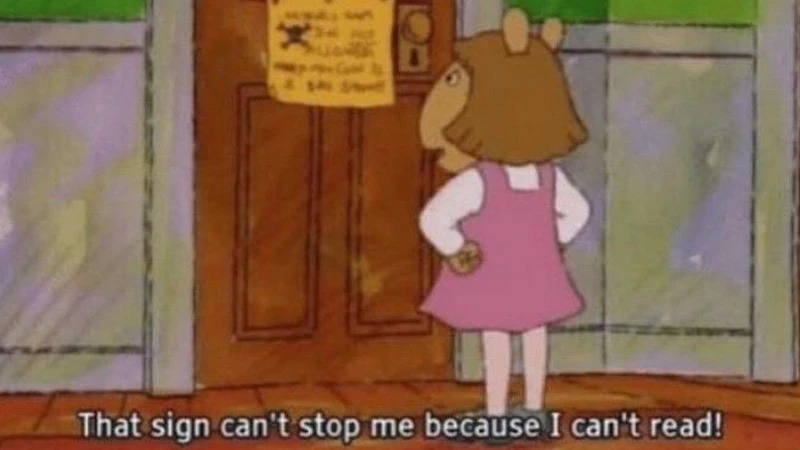
For its part, the Supreme Court has also weighed in on this. Leis v. Flynt confirmed that “since the founding of the Republic, licensing and regulation of lawyers has been left exclusively to the States.” It’s hard to write an ambiguity into McDade when it was written in the context of that case. Bondi claims Congress was “silent on enforcement mechanisms,” but it didn’t need to speak up because everyone understood — until this morning — that “licensing and regulation of lawyers has been left exclusively to the States.”
There’s no ambiguity for executive branch rulemaking… this is all long settled. But the DOJ’s mob-inspired leadership wants a rule in place to push state bar authorities to abdicate their responsibilities, even if the law isn’t on the DOJ’s side. It’s the same playbook that convinced nine Biglaw firms to sign over millions of dollars and all their dignity to avoid a fight that they would’ve absolutely won.
The law doesn’t provide much comfort if the other side is willing to make vindicating those rights difficult and expensive. If Paul Weiss worried about the costs of a fight with the government, what chance does some small state bar committee have?
This rule drops while Lindsey Halligan — the insurance defense attorney who cosplayed as a U.S. Attorney — faces renewed bar complaints after multiple federal judges found she made “fundamental misstatements of the law” to a grand jury, served without legal authority, and had no more power to sign filings than any random person walking down the street. It comes after courts have flagged the DOJ repeatedly violating orders.
The proposed rule also claims authority over complaints against “former” DOJ lawyers — an effort to do a solid for Jeffrey Clark, facing possible disbarment in D.C. for the whole “fabricate election law violations in order to overturn the election” trick.
Accountability mechanisms are already failing. State bars have been punting — Virginia initially refused to investigate Halligan, Florida invented a “constitutional officer” doctrine to shield Bondi, New York referred complaints about Emil Bove to DOJ’s own gutted internal office. The proposed rule would institutionalize this cowardly buck passing by making DOJ the official gatekeeper for all complaints against its own lawyers.
If this rule goes into effect, it tells every government lawyer to do whatever the administration tells them, and not to worry about how many ethical rules might get broken along the way. The DOJ will run interference with the only authorities empowered to take a lawyer’s license. It creates a class of lawyers who are, for all practical purposes, above professional accountability.
The good news, such as it is, is that this proposed rule is subject to a public comment period before it can be finalized. The better news is that it almost certainly cannot survive legal challenge and the McDade Amendment is a statute that says the exact opposite of what this rule proposes. The bad news is… who is going to fight that case?
This should light a fire under every lawyer to do more to support local disciplinary authorities. Speak out, urge action, and — if necessary — volunteer pro bono legal services to fight back against this rule. Professional discipline is the only accountability left for Trump’s lawyers.
And now we know that they understand that too.
Trump DOJ Pushes to Sideline State Bar Ethics Investigations [Bloomberg Law]
DOJ Proposed Rule — Federal Register [Federal Register]
The Department of Justice’s Broken Accountability System [Brennan Center for Justice]
A Plan to Hold DOJ Leadership Accountable for Undermining the Rule of Law [Justia Verdict]
Earlier: Disbar Them All: The Only Accountability Left For Trump’s Lawyers
 Joe Patrice is a senior editor at Above the Law and co-host of Thinking Like A Lawyer. Feel free to email any tips, questions, or comments. Follow him on Twitter or Bluesky if you’re interested in law, politics, and a healthy dose of college sports news. Joe also serves as a Managing Director at RPN Executive Search.
The post Pam Bondi Wants Sole Power To Decide If DOJ Lawyers — Including Herself — Act Unethically appeared first on Above the Law.