

Ed. note: Please welcome Renee Knake Jefferson back to the pages of Above the Law. Subscribe to her Substack, Legal Ethics Roundup, here.
Welcome to what captivates, haunts, inspires, and surprises me every week in the world of legal ethics.
Happy Monday!
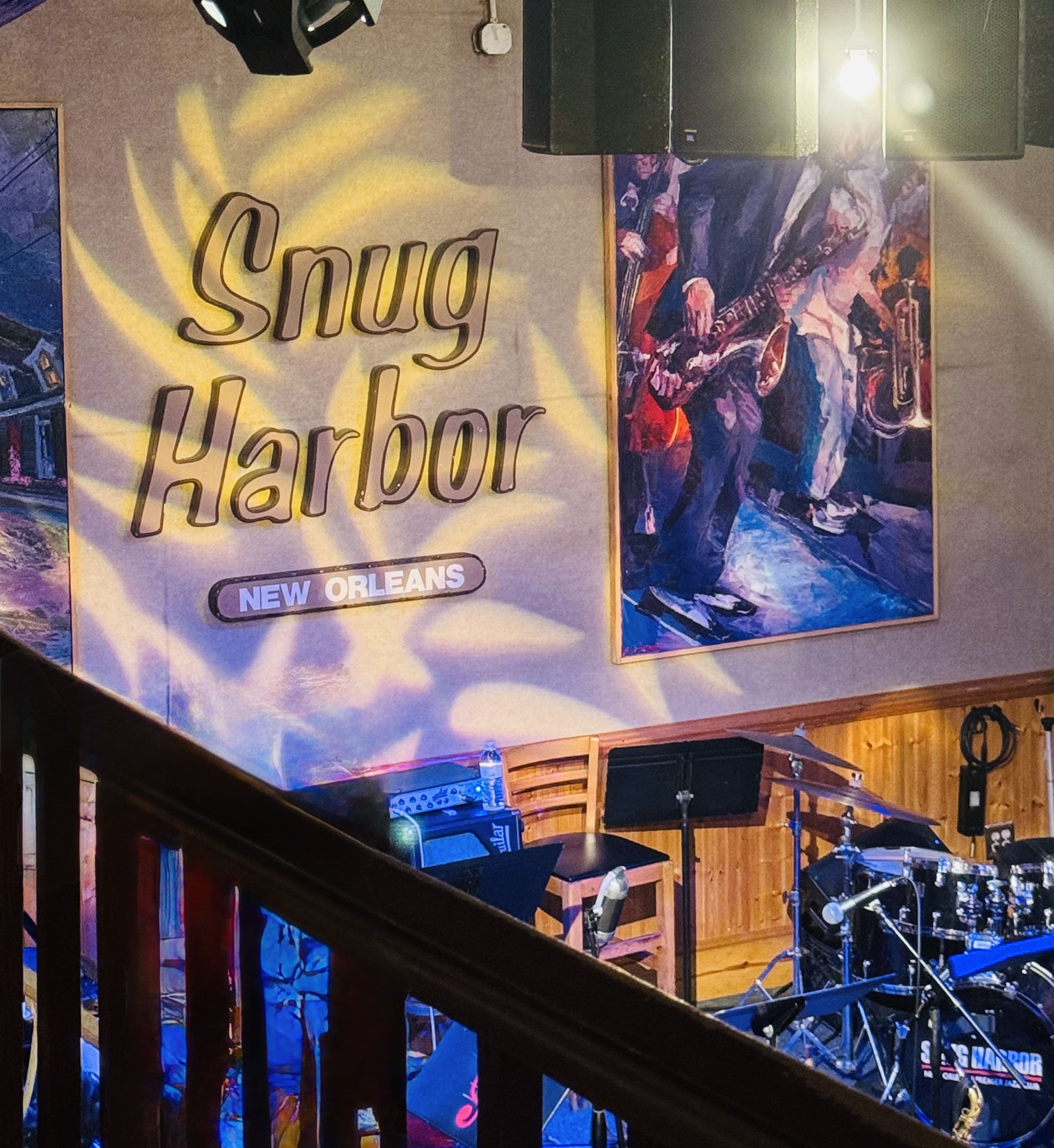
I’m writing you from New Orleans while attending the Association for American Law Schools Annual Meeting. It was wonderful to see many LER readers at the standing-room-only panel I moderated on Thursday — “The Law Professor’s Role in Protecting Our Legal System” — with speakers Scott Cummings (UCLA), Matthew Diller (Fordham), Rachel Lopez (Temple), and Milan Markovic (Texas A&M). It was also great to hear an outstanding jazz performance by Ingrid and Christine Jensen at Snug Harbor Jazz Bistro.
This week I’m teaching a (new to me) course at the University of Houston Law Center, a one-week intensive called Legal Methods, and next week I begin the regular semester teaching Professional Responsibility.
With the start of a new year and a new semester, I’ve been reflecting on why I keep writing the Legal Ethics Roundup. Later this week I’ll be sharing a Bonus Content post to explain more, but for now I’ll say this.
The LER was inspired as I watched questions of lawyer and judicial ethics move from the margins to the center of our legal and democratic life—and I was struck by how hard it had become to see the full picture. Developments were unfolding quickly, across jurisdictions, and often without context or synthesis. Even people who cared deeply about institutional integrity were trying to piece things together on their own. What emerged through this Substack is not really a newsletter in the usual sense. The LER is closer to a public-service legal ethics intelligence brief — a place to step back from the noise and understand what is happening, why it matters, and how today’s decisions may shape tomorrow’s institutions.
Now for your headlines.
Highlights from Last Week – Top Ten Headlines 📰
#1 “Impeachment: Holding Rogue Judges Accountable.” Last Wednesday the Senate Judiciary Committee held hearings about so-called “rogue judges.” Witnesses included Will Chamberlain (Article III Project), Rob Luther (George Mason), and Stephen Vladeck (Georgetown). Watch the hearings and read their testimony here. Highlights from each follow below:
Chamberlain: “Impeachments of judges are relatively rare throughout our nation’s history, to insulate the judicial process from politics and protect the rule of law. Judge Boardman’s case, however, is the rare one where a judicial impeachment would vindicate the integrity of the judiciary and protect judges from improper influence. Nicholas Roske tried and failed to assassinate Justice Kavanaugh. The evidence presented at sentencing demonstrated that he did so because he wanted to change the Supreme Court’s jurisprudence on abortion.13 Judge Boardman’s slap on the wrist for Mr. Roske, if left to stand, will only encourage others upset with judicial decisions to try similar tactics.”
Luther: “The cloak of judicial independence does not shroud a judge from accountability-before this body or the public. For facilitating violations of the U.S. Constitution and federal statutory law with respect to Members of this Congress and for pursuing a vengeful contempt expedition into the highest echelon of our national security officials, Judge Boasberg must be held accountable.”
Vladeck: “I would have welcomed an opportunity to explore with you how Congress can better promote [judicial accountability] across the entire federal judiciary—including, in particular, with respect to the Supreme Court. Unfortunately, today’s hearing is focused on something else altogether—an effort to vilify, and perhaps muster support for the impeachment of, two highly regarded federal district judges because some members of this Subcommittee disagree with some of their rulings. As someone who spends a lot of time disagreeing with judicial decisions, I can certainly relate to that impulse. But in my testimony today, I respectfully submit that the Subcommittee’s efforts are deeply misguided—for at least three reasons.”
#2 “Law School Student Groups Ask ABA to Review Accelerated Associate Recruiting Timelines.” From Law.com: “Student associations and governments from 18 top-tier law schools signed a joint letter that asserts ‘accelerated timelines have also begun to undermine legal education, student and staff well-being, and the recruitment market.’” Read more here.
#3 “Advocacy Group Accuses US Appeals Court Judge of Mistreating Law Clerks.” From Reuters “A non-profit organization that advocates on behalf of law clerks … filed a judicial misconduct complaint accusing a federal appeals court judge of mistreating her clerks and creating a ‘workplace climate characterized by fear, oppressive control, intimidation, humiliation, and bullying.’ The Legal Accountability Project alleged that U.S. Circuit Judge Sarah Merriam of the New York-based 2nd U.S. Circuit Court of Appeals has maintained a ‘culture of fear’ in her chambers despite previously pledging to improve workplace conditions following an earlier complaint by a clerk.” Read more here.
#4 “Texas Becomes First State to End American Bar Association Oversight of Law Schools.” From Houston Public Media: “The Texas Supreme Court on Tuesday finalized a tentative opinion issued in September that no longer requires soon-to-be lawyers to attend a law school accredited by the American Bar Association. The power to approve those law schools now rests with the state’s highest civil court.” Read more here.
#5 “Judge Who Allegedly Kept ‘Book of Grudges’ Faces Misconduct Charges.” From the ABA Journal: “A Pennsylvania judge who allegedly kept a ‘Book of Grudges’ and a sexually explicit calendar in her office violated judicial conduct standards, according to formal charges filed Wednesday. The Judicial Conduct Board of Pennsylvania also accused Lehigh County Magisterial District Judge Amy L. Zanelli of excessive tardiness and absences. She was elected to her position in 2021. Zanelli allegedly described a local attorney as ‘just a d- – -’ in the ‘Book of Grudges’ and made notes that were critical of another person who appeared in her court in landlord-tenant matters. She placed the ‘Book of Grudges’ in a general work area in the office accessible to her staff to add notations to it if they wished, according to the complaint.” Read more here.
#6 “Texas Judicial Ethics Rules Permit Same-Sex Wedding Refusal.” From Bloomberg Law: “A Texas judge’s refusal to marry same-sex couples for religious reasons while still marrying opposite-sex couples is permitted under the state’s judicial ethics code, the Texas Supreme Court said Friday, offering clarity in two high-profile disputes. Answering a certified question from the US Court of Appeals for the Fifth Circuit, the justices said it’s not a violation to refrain from performing a wedding ceremony based upon a sincerely held religious belief.” Read more here.
#7 “One Person at a Time: Lawyers and Legal Legitimacy in a Shifting World.” From Melissa Mortazavi (Oklahoma) in Jotwell reviewing Hannah Haksgaard’s (South Dakota) The Rural Lawyer: How to Help Incentivize Rural Law Practice and Help Small Communities Thrive: “While there is a growing body of research on rural lawyering and rural access to justice, none approaches the subject with the level of detail and care to individual experiences that Professor Hannah Haksgaard does in her quietly landmark work, The Rural Lawyer: How to Incentivize Rural Law Practice and Help Small Communities Thrive. She sets out the book’s seemingly modest goal with a humility that mirrors the project she describes so lovingly, as an ‘analysis of how a program can help new rural lawyers.’ (P. 8.) However, this deeply intimate account detailing the successes (and failures) of South Dakota’s Rural Attorney Recruitment Program, does far more than that: this book interrogates the relationship between communities, legal practice, lawyer to lawyer mentorship, and law itself. In doing so, it provides vital insights for our turbulent times.” Read more here.
#8 “4 Developments That Defined The 2025 Ethical Landscape.” From Law360: “The legal profession spent 2025 at the edge of its ethical comfort zone as courts, firms and regulators confronted how fast-moving technologies and new business models collide with long-standing professional duties. A surge of sanctions tied to improper artificial intelligence use, a U.S. Court of Appeals for the Ninth Circuit YouTube dissent, rapid expansion of management services organizations and alternative business structures, and the Trump administration’s pressure campaign against major firms dominated the legal ethics docket. Below is a breakdown of four developments that shaped this year’s ethics conversation — and what they signal for 2026.” Read more here.
#9 “Legal Ethics Year in Review: 2025.” From Brad Wendel’s (Cornell) Legal Ethics Stuff Substack: “To my mind the biggest legal ethics story of 2025 by a long shot was the attempt by the Trump administration to use executive orders to destroy law firms who either hired lawyers who angered the president (like Marc Elias at Perkins Coie or lawyers at WilmerHale who had worked on the Special Counsel investigations of Trump) or represented clients in causes the president deemed inimical to the national interest.” Read more here.
#10 “Attorney Conduct Cases Coming to a Head in 2026.” From Reuters: “The new year kicks off with the scheduled trial of a top U.S. Supreme Court lawyer, and pivotal rulings for one of the president’s legal allies as well as for a law firm accused of profiting from a judicial conflict of interest. Here are three cases testing the boundaries of attorney conduct and professional ethics in 2026.” Read more here.
Get Hired 💼
Did you miss the 400+ job postings from previous weeks? Find them all here.
Upcoming Ethics Events & Other Announcements 🗓️
Did you miss an announcement from previous weeks? Find them all here.
Keep in Touch 📝
News tips? Announcements? Events? A job to post? Reading recommendations? Email legalethics@substack.com – but be sure to subscribe first, otherwise the email won’t be delivered.
Renee Knake Jefferson holds the endowed Doherty Chair in Legal Ethics and is a Professor of Law at the University of Houston. Check out more of her writing at the Legal Ethics Roundup. Find her on X (formerly Twitter) at @reneeknake or Bluesky at legalethics.bsky.social.
The post Legal Ethics Roundup: ‘Rogue Judges’ Senate Hearing, TX Ends ABA Oversight, Judge Charged Over ‘Book Of Grudges,’ Predictions For 2026 & More appeared first on Above the Law.