

Ken Starr spent the 90s and millions of taxpayer dollars investigating a real estate deal that turned up nothing before pivoting to criminalizing an affair between consenting adults. To be clear, Bill Clinton’s relationship with Monica Lewinsky raised the sort of serious power imbalance issues that HR departments exist to prevent, but the Starr investigation wasn’t designed to spark a nuanced conversation about sexual harassment, it was an effort to translate quasi-puritanical moral panic into cheap political points.
Apparently, the moral scold of the Clinton era didn’t have the same hang ups when a convicted child sex offender came calling.
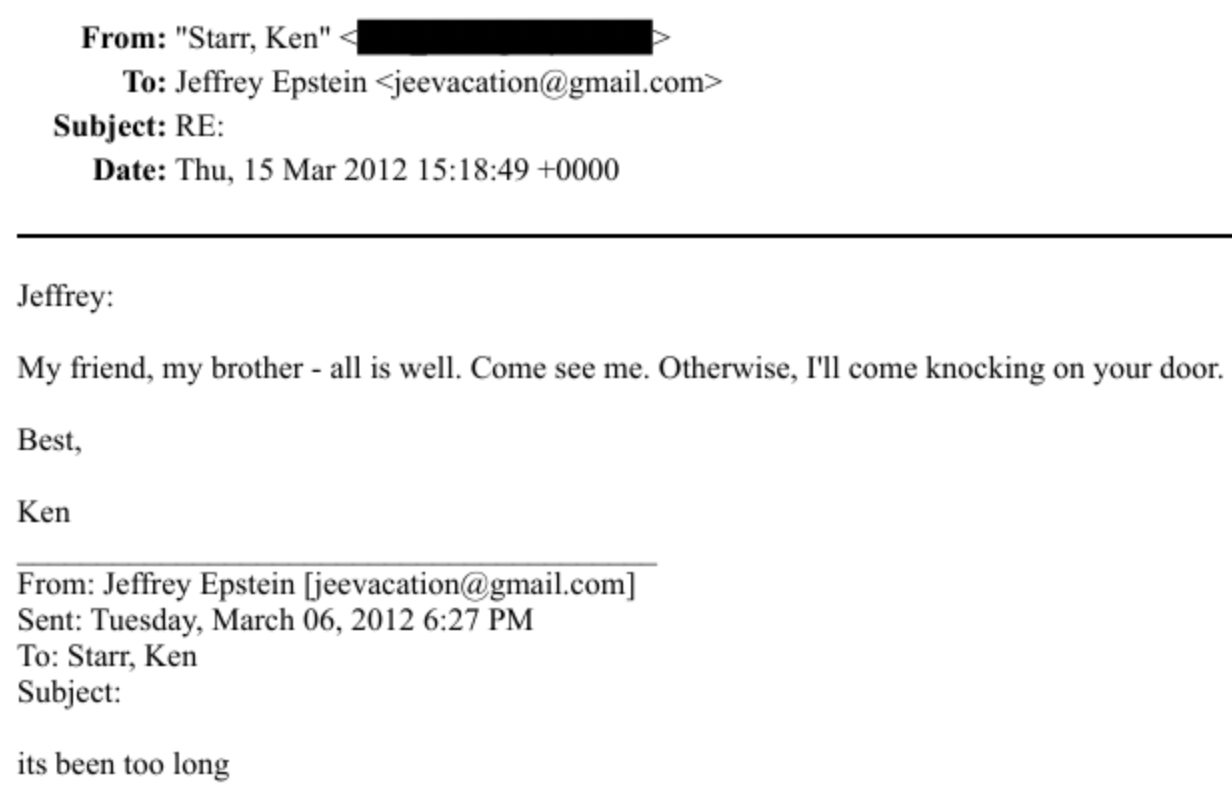
Emails included in the DOJs latest Esptein files dump show Starr — while serving as president of Baylor University — personally corresponded with and hosted Jeffrey Epstein on the Baylor campus. In 2012. Four years after Epstein had already pleaded guilty to soliciting and procuring a minor for prostitution.
I’m shocked… SHOCKED… that the man who worked with Brett Kavanaugh to prosecute Bill Clinton would exhibit such moral flexibility.
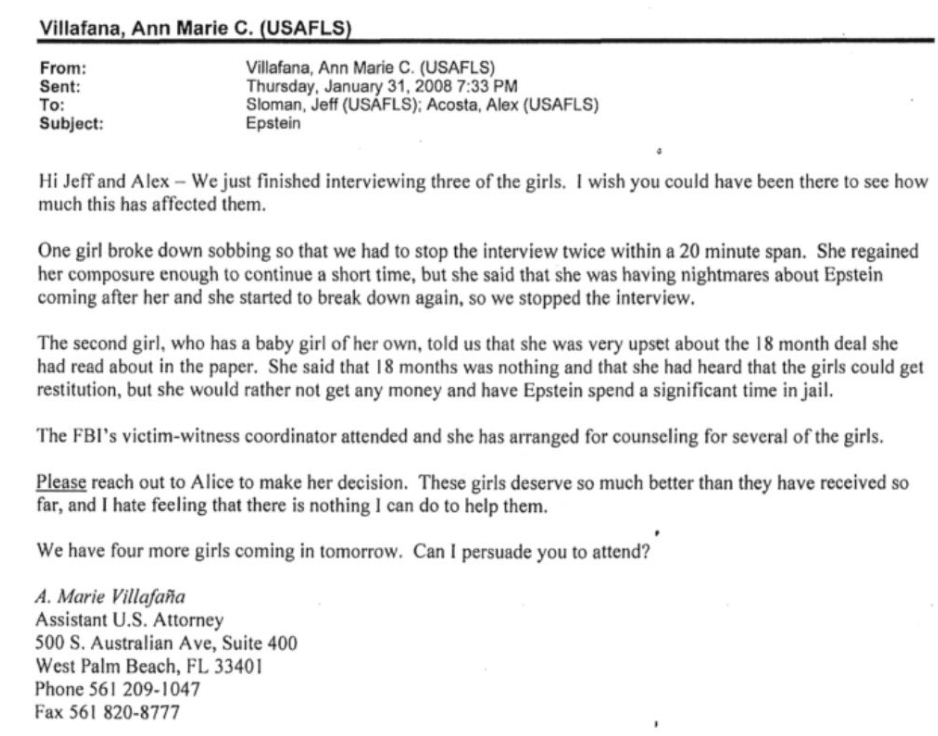
Lest anyone tries to convince themselves that Starr might not have known about Epstein’s 2008 child prostitution plea — or the much more horrific contemporaneous allegations that were buried by Epstein’s Non-Prosecution Agreement — remember that Ken Starr represented Epstein in that deal. He didn’t just know about the facts of the charge Epstein would plea to, but everything about the case. All the allegations that the career prosecutor on the case kept begging her supervisors, especially future Trump Labor Secretary Alex Acosta, to consider:
Julie K. Brown, the journalist who did the most to bring Epstein’s crimes to light, reported in Perversion of Justice, that Starr was the “most powerful force” behind Epstein’s 2008 plea deal, leading a “scorched-earth” legal campaign to keep Epstein out of federal prison. Epstein ultimately took a year of county jail with 12-hour daily work release.
Zealously representing a criminal defendant does not require being their buddy. But Starr was calling Epstein his friend and brother years after the fact. While at Baylor, Starr arranged for Epstein to come to Waco and rolled out the red carpet. Starr signed off his emails to Epstein with “hugs” and “love,” because nothing says “appropriate professional boundaries” quite like sending mash notes to a registered sex offender. Starr expressed interest in visiting Epstein in New York and Florida and the two chatted about current events like old college buddies catching up.
In 2016, after Starr was ousted from Baylor over the sexual assault cover-up — oh, right! Remember how Starr’s tenure as Baylor’s president ended after it came out that his office looked the other way amidst a series of sexual assault claims? Claims that the university didn’t address because the football team was nationally relevant? According to the Baylor Lariat, Starr apparently complained to Epstein about a Texas Monthly article detailing the scandal, calling it an “attack” on the “turbo-charged leadership” of football coach Art Briles.
This continued correspondence wasn’t legal work. Lawyers don’t have to keep up with former clients socially. And when your work revealed that those clients credibly ran a child sex ring, you definitely don’t have to keep them on the Christmas card list.
Starr’s access to more evidence about Epstein’s 2008 plea makes his correspondence more disturbing than the emails involving other lawyers, but the same depressing question dominates over all of Epstein’s stable of lawyer pen pals: didn’t anyone ever bother to ask why a guy with a child prostitution conviction wanted to be their best friend?
Epstein was a groomer and part of that process involved cultivating relationships with the rich and powerful. He built a shield of legitimacy by association and all of his lawyer buddies became bricks in that wall. Epstein brought credentialed, respectable people into his orbit so people could point to his dinner companions and ask themselves “well, would all these important people hang out with a predator?” The answer, obviously, was yes — but most folks naively thought it wasn’t.
And look, people can deserve second-chances. But lawyers are professionally expected to exercise some healthy skepticism. Someone who served their time for a drunken bar fight 10 years ago probably isn’t using their relationship with a lawyer as part of ongoing exploitation. Someone guilty of sexually exploiting children should raise some red flags. It’s not so much that these lawyers responded to Epstein’s emails, it’s that they seemed to do so with reckless credulity.
For Starr — who knew back in 2008 that the government had reason to accuse Epstein of running a “cult-like” organization — it requires gobsmacking levels of obliviousness not to take a second to ask if maybe you’ve become the mark once you’re sending a sex offender “hugs” and “love.”
Or maybe it was just cynicism. As we noted when Starr died in 2022, this was a guy who dragged the country through scandal for naked political gain. A guy who abdicated his role in protecting Baylor students to maintain a winning football program. Why would anyone expect any sort of moral pause when it came to a charming rich man with a lot of friends who just happened to traffic children?
Ken Starr made a career out of arguing that character counts and that private conduct reflects upon public fitness. It’s a shame he never took his own advice.
 Joe Patrice is a senior editor at Above the Law and co-host of Thinking Like A Lawyer. Feel free to email any tips, questions, or comments. Follow him on Twitter or Bluesky if you’re interested in law, politics, and a healthy dose of college sports news. Joe also serves as a Managing Director at RPN Executive Search.
The post Ken Starr Writing To ‘My Friend, My Brother’ Jeffrey Epstein appeared first on Above the Law.